
just a place to show off my work
Showing posts with label IFTTT. Show all posts
Showing posts with label IFTTT. Show all posts
Wednesday, May 24, 2023

Tuesday, May 23, 2023
Monday, May 22, 2023
Sunday, May 21, 2023
Saturday, May 20, 2023
Friday, May 19, 2023
Thursday, May 18, 2023
Wednesday, May 17, 2023
Tuesday, May 16, 2023
Saturday, May 13, 2023
Friday, May 12, 2023
Monday, May 8, 2023
Wednesday, May 3, 2023
Just in Time for Bike Month: The Active Communities Plan Interactive Map!
Just in Time for Bike Month: The Active Communities Plan Interactive Map!
By Christopher Kidd
Published May 03, 2023 at 10:19AM
https://ift.tt/oXDzt0M
By Christopher Kidd
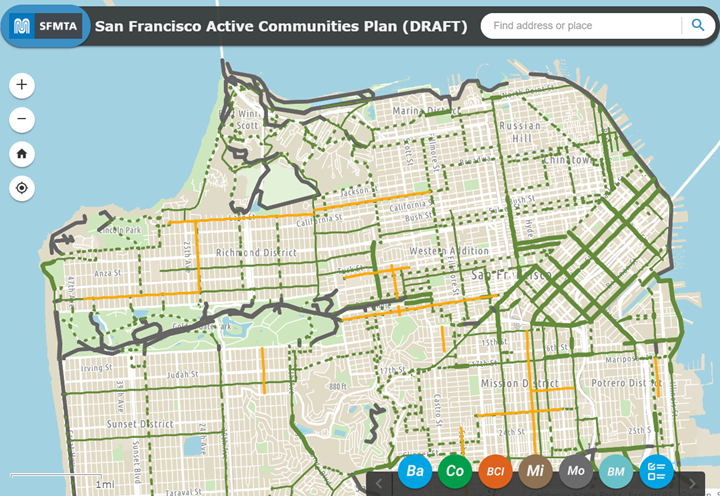
Image of the new Active Communities Plan (ACP ) interactive map
As part of our ongoing public outreach about the Active Communities Plan, the SFMTA has created a new ACP interactive map. The release of the map comes just a couple of weeks after we began collecting feedback through our new survey.
The map shows conditions for biking, scooting and rolling across San Francisco, as well as multiple layers of analysis conducted by the Active Communities Plan team. It is meant to help users understand how different factors like comfort, safety and network quality influence whether people decide to use active transportation or not.
We want users to have the opportunity to explore and compare data, reflect on how it compares to their experiences with active transportation and provide input about what kinds of solutions work best.
The interactive map has six main layers to explore:
- Baseline Data – shows today’s active transportation network, our pipeline of approved projects and the location of every public bike rack in the city.
- Collision Analysis – shows the locations of bike and scooter collisions on the High Injury Network before the pandemic (2017-2019) and since the start of the pandemic (2020-2021), as well as the neighborhoods with the most unreported (unlinked) bike & scooter collisions.
- Comfort Analysis – shows the Bike Network Comfort Index (BCI), which categorizes perceived comfort or risk by people biking, scooting or rolling. This is only our first draft of the BCI – by taking our survey, you can help shape how the BCI is scored!
- Micromobility Analysis – shows what streets people ride most when using BayWheels e-bikes or scooters, which BayWheels stations get the most ridership and the service areas for our micromobility providers.
- Modeshare Analysis – shows data from the American Communities Survey: commute mode share by bicycle and the distribution of zero-car households.
- Bike and Micromobility Activity Analysis – combines our BayWheels e-bike trip data, scooter trip data and modeled bike and scooter trip data from Replica to estimate the volume of trip activity. You can view activity across the city, on the active transportation network or by network facility type.
Once you’ve had a chance to explore our interactive maps, take our survey. The results will help us understand your needs and barriers to active transportation, as well as how safe or comfortable people feel using different types of streets. From there we can develop network, program and policy recommendations that directly reflect the needs and priorities of people across the city. Our survey runs through July 31st.
The Active Communities Plan public engagement effort has reached more than 1,000 residents since January, and we have events scheduled through mid-June with more to come throughout the summer. Visit Active Communities Plan (SFMTA.com/ActiveCommunities) for our schedule, which is updated regularly. If you want us to attend your community meeting or event, contact ActiveCommunities@sfmta.com and let us know!
Published May 03, 2023 at 10:19AM
https://ift.tt/oXDzt0M
Tuesday, May 2, 2023
Monday, May 1, 2023
Three Golden Rules to Improve Scooter Safety
Three Golden Rules to Improve Scooter Safety
By Mona Chiu
Published May 01, 2023 at 12:32PM
https://ift.tt/YunLMZ0
By Mona Chiu
The SFMTA has some exciting news for all who use the sidewalk in the city! Starting May 1, 2023, we'll be launching a new safety campaign to promote safe and responsible electric scooter use for both permitted scooter share devices and privately operated scooters. The campaign will focus on three key safety rules that every rider should keep in mind while riding: no sidewalk riding, no speeding and no double riding (two people riding one device). By educating riders about the dangers of sidewalk riding, unsafe speeding and riding, and improper parking, we hope to make the city safer for everyone.

Sidewalk riding has been a major concern for pedestrians in San Francisco, and it's illegal to ride an electric scooter on the sidewalk.
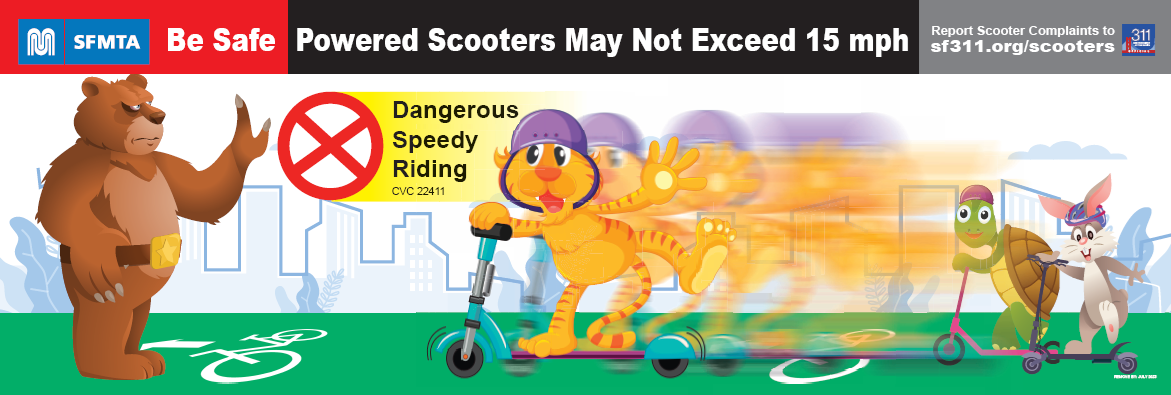
Electric scooters can travel at speeds of up to 15 miles per hour, which can be dangerous if riders aren't paying attention to their surroundings. The SFMTA's safety campaign will encourage riders to be mindful of their speed (riding over 15 miles per hour is illegal) and to obey traffic laws.
The campaign will also focus on emphasizing double riding is illegal. By law, only one rider should ride a scooter at a time.

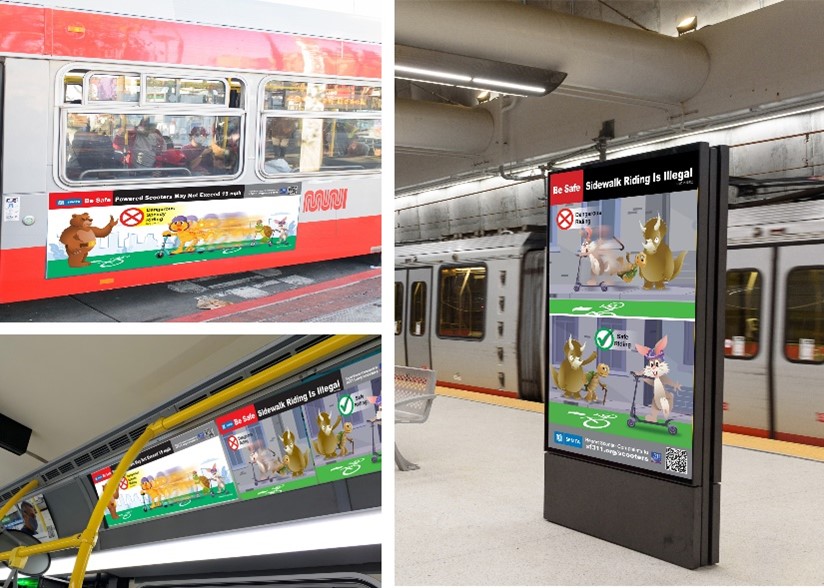
To spread the word about this safety campaign, we will be placing posters on Muni buses, displaying ads in Muni bus stops and running ads on social media. This should help us reach as many scooter riders as possible and encourage them to prioritize safety while riding.
The SFMTA already has been actively working to improve scooter safety in San Francisco. We have implemented several policies and regulations, including:
- Requiring permitted scooter companies to provide a lock-to system to keep parked scooters out of the accessible path of travel
- Requiring permitted scooter companies to develop and implement a plan for safe riding. These plans include rider training, in-app messages with safety messages and sidewalk detection technology on their devices.
- Encouraging scooter permittees to adopt an escalating penalty structure for improper riding and parking
- Working with the Port of San Francisco to reduce sidewalk riding on the Embarcadero.
The agency has also worked to improve infrastructure for scooter riders. We have installed:
- 3,000+ racks installed since the beginning of scooter permit program in 2018
- 11,000+ bike racks available citywide for scooter parking
- 465 miles of bikeways in San Francisco
- 78 miles off-street paths
- 139 miles of bike lanes (Class II)
- 43 miles of separated bikeways (Class IV)
- 45 miles of bike lanes and separated bikeways added since 2018
- 33 miles of Slow Streets
The agency is also working to expand the active transportation network in the city through our new Active Communities Plan.
If you want to report any complaints related to scooter riding, you can call 311 or visit the 311 website.
To learn more about what the SFMTA is doing to promote a safe and useful scooter share system, visit our scooter share permit project page and view our data dashboards.
Published May 01, 2023 at 12:32PM
https://ift.tt/YunLMZ0
Sunday, April 30, 2023
Friday, April 28, 2023
Muni Metro Fix-It Week Maintains the Subway Infrastructure
Muni Metro Fix-It Week Maintains the Subway Infrastructure
By Jessie Liang
Published April 28, 2023 at 02:17PM
https://ift.tt/sA06cfB
By Jessie Liang
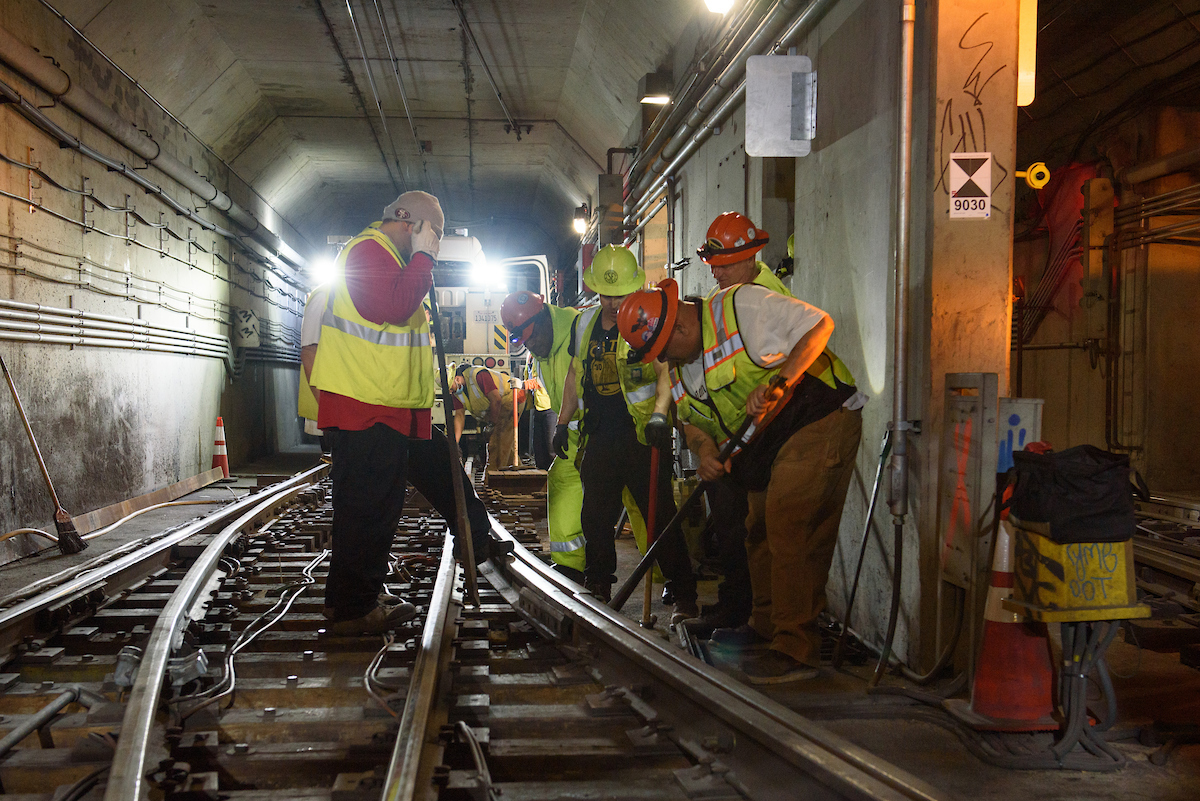
Track crew removing old rail at the Van Ness crossover
The first Muni Metro Fix-It Week of 2023 was a resounding success in March, and it’s also the first Fix-It Week since the SFMTA launched the Central Subway in early January of this year. Here is a behind-the-scenes video recap. Fix-It Week is the SFMTA’s quarterly effort to optimize work time by closing Muni Metro early for critical maintenance. The SFMTA’s Maintenance of Way (MOW) teams did an excellent job maintaining the subway and preventing future breakdowns.
Fix-It Week helps the Muni Metro get a 20% improvement in speed and about a 20% improvement in reliability in the subway. It takes fewer minutes to take the N Judah from the Outer Sunset to Embarcadero now than it did in 2019.
From March 16 to March 22, 2023, the Muni Metro Subway between Embarcadero and West Portal closed at 9:30 p.m. to provide SFMTA maintenance crews an extended window to perform underground infrastructure improvement work that cannot be completed during the usual overnight windows. During the subway closure, buses provided substitute service for Muni Metro lines on the surface and connected all stops on Market Street.
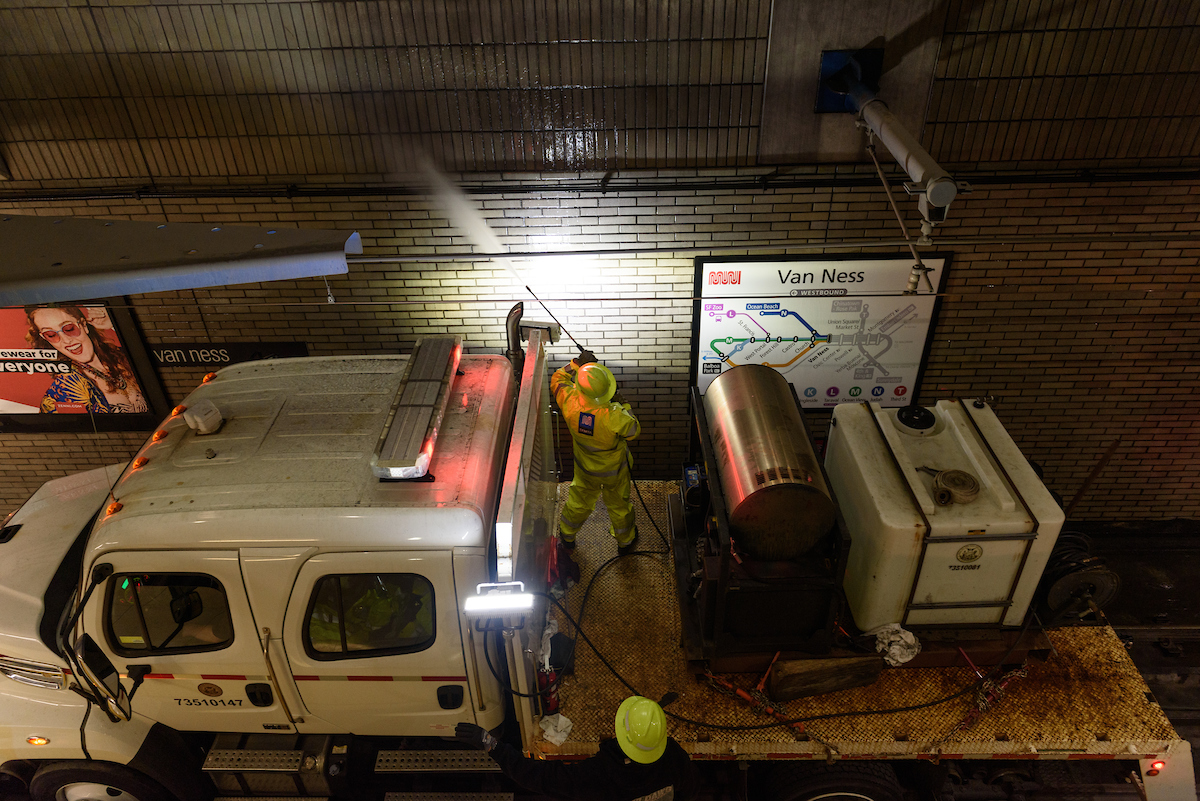
Track crew powerwashing station walls
The goal of Fix-It Week is to make Muni metro subway operations more reliable, ensure safety, and improve the customer experience. Nine MOW teams, Track, Cable Car, Motive Power, Maintenance Engineering, Mechanical Systems, Overhead Lines, Underground, Paint Shop and Signal, were involved in the maintenance work.
Major maintenance work includes:
- Track replacement and reinstallation from the Ferry Portal to the Van Ness Crossover
- Mechanical systems cleaning, maintenance and installation
- Signal repairs and upgrades, including the demolition of old train control system racks, equipment and wiring
- Track fastener and subway lighting surveys, and drain cleaning around switches
- Overhead Line inspections and Overhead Section Break hardware adjustments
- Debris removal and traction power substation inspections
- Cable Car maintenance and repairs
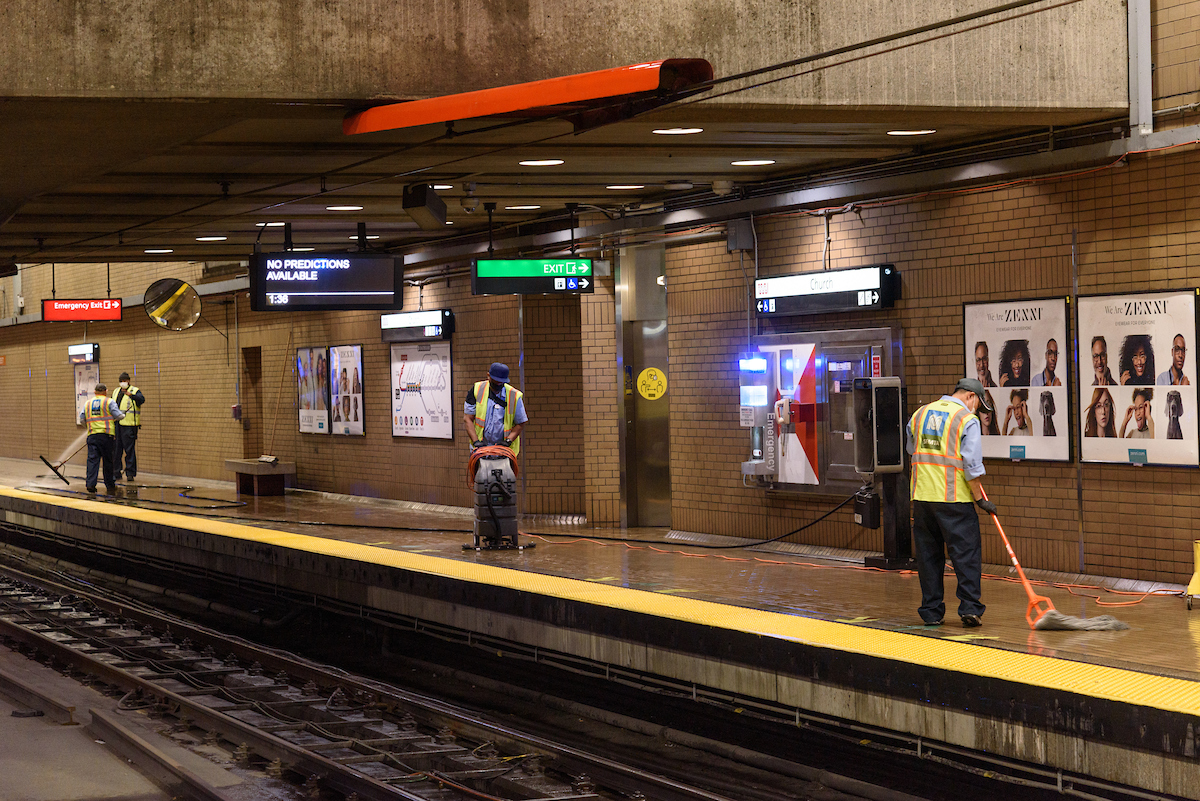
Custodial staff cleaning Church Station
The SFMTA teams completed over 2,000 hours of maintenance and inspections over the seven night shutdown. They were able to perform 161 feeder operations, replace more than 125 bulbs for trackway lighting in multiple locations, renew 750 feet of Overhead Contact System contact wire, replace eight blue light phones and inspect approximately 8,000 track fastener plates from the Ferry Portal to Powell Station.
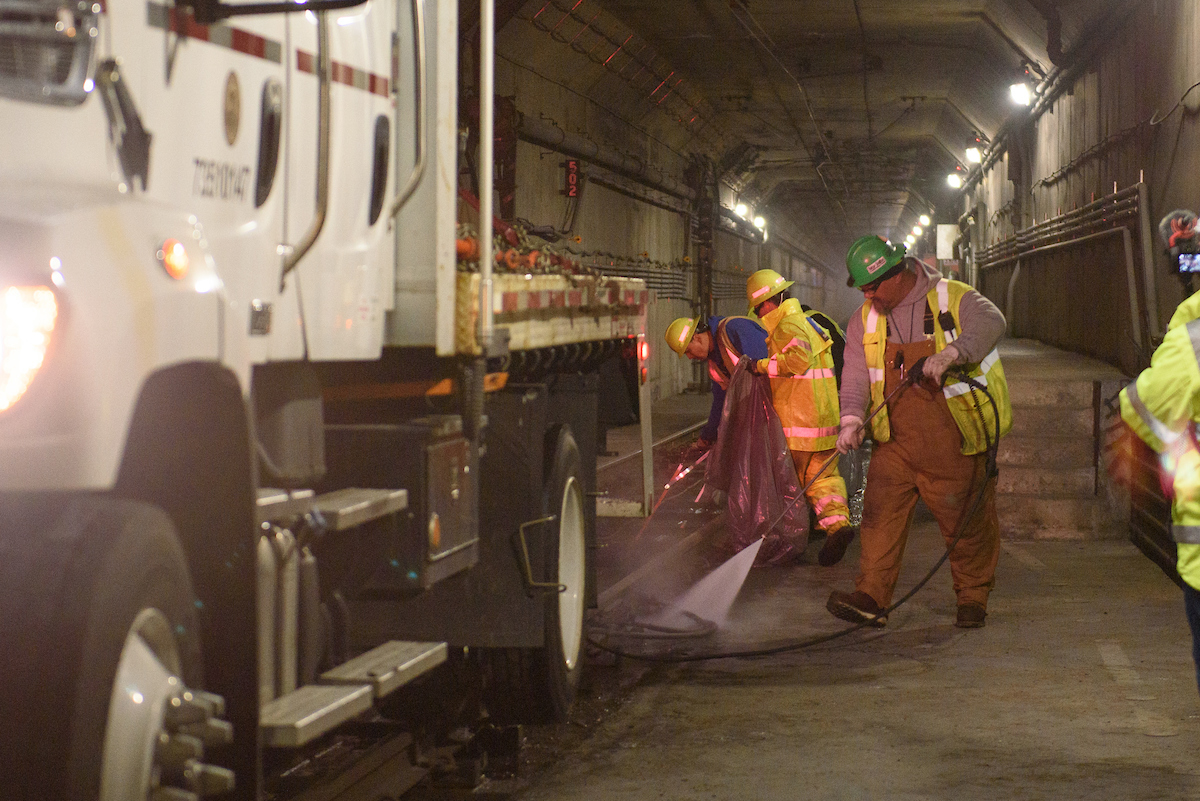
Track crew powerwashing and removing trash from trackway
A support team was also contributed to the success of Fix-It Week. These staffers helped coordinate maintenance work, upheld all safety standards and ensured that subway service resumed on time every day.
The SFMTA will continue to keep the Muni Metro system in a state of good repair. The next Fix-It Week is scheduled for July 2023, and we thank you for your patience and understanding while we do this vital work.
For more information, visit Muni Metro Maintenance Project (SFMTA.com/SubwayMaintenance).
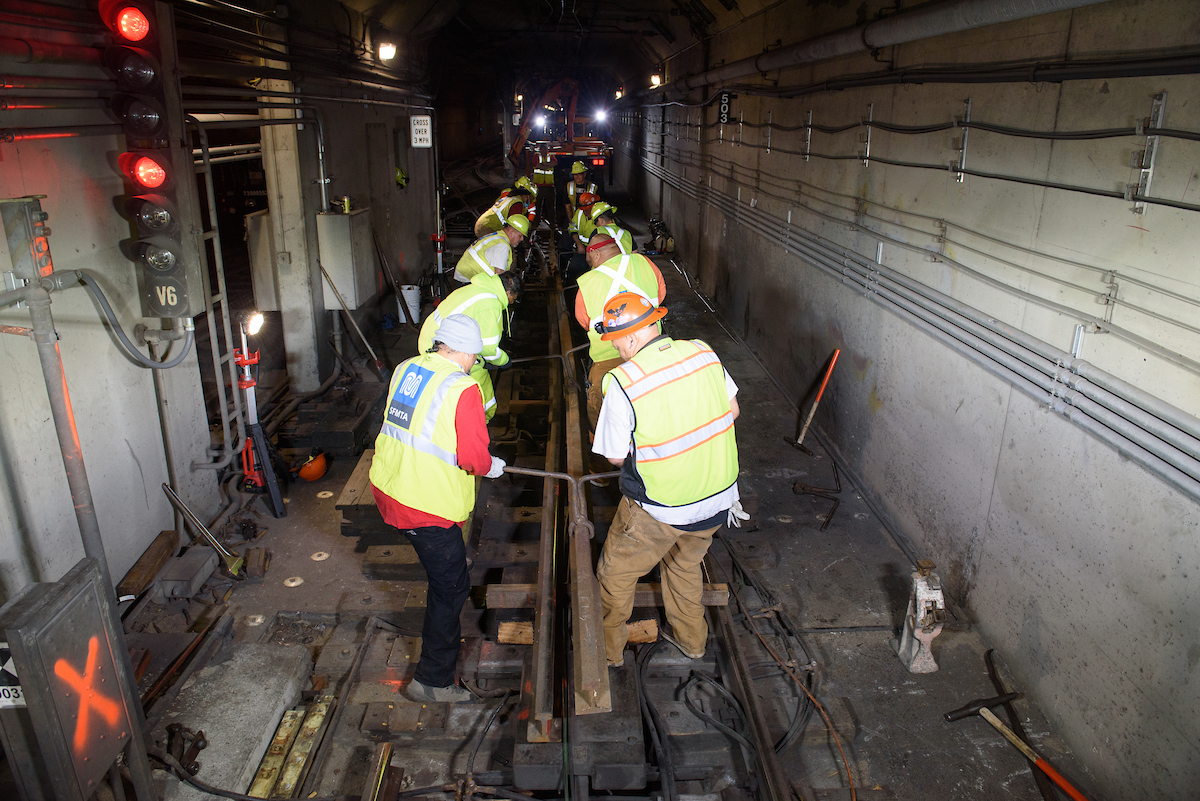
Track crew moving new rail into position by hand at the Van Ness Crossover
Published April 28, 2023 at 02:17PM
https://ift.tt/sA06cfB
Subscribe to:
Posts (Atom)